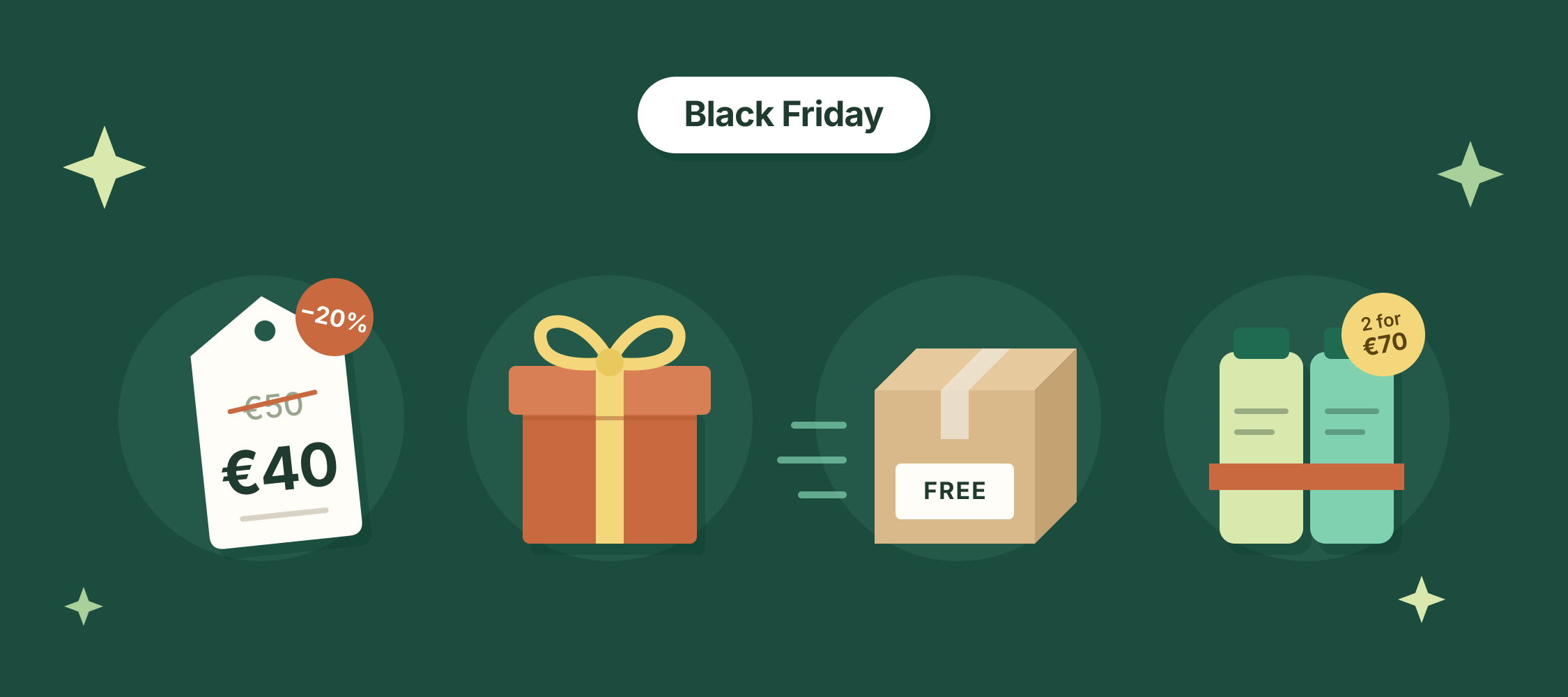
Every November, shop windows and social media fill with Black Friday offers. In Kosovo, electronics stores, shopping centres and online shops now run campaigns that last a weekend, a week or even the whole month. For a small business, the question is not only whether to join in, but why.
What is Black Friday?
Black Friday began in the United States as the day after Thanksgiving, which falls on the fourth Thursday of November. For American shops, it marked the start of the holiday shopping season, with big discounts that drew huge crowds. Online shopping turned it into a global event, and it is often followed by Cyber Monday, which focuses on online deals. Today, many customers in Kosovo wait for it before buying larger items.
For a business, a discount always costs something. What you get back depends on what you want from it. Two examples show the difference.
Scenario 1: Arta wants profit
Arta runs a small electronics accessories shop in Prishtina. In her stockroom she has 40 pairs of last year’s headphones. She bought them for €30 each and normally sells them for €50, but they have barely moved in months.
For Black Friday, she offers them at €40, 20% off, and keeps her new products at full price. She still makes €10 on each pair. By Sunday, all 40 are sold: €400 in profit and €1,600 back in her account, ready for products that sell well before the holidays.
Her rule: discount only where the margin still leaves a profit, and only on stock that needs to move.
Scenario 2: Blerim wants loyal customers
Blerim runs a small bakery café. A coffee and a pastry sell for €3 and cost him about €1.50 to make. For Black Friday weekend, he offers new visitors 50% off their first order and gives each of them a card with his opening hours.
He makes nothing that weekend, because the discounted price only covers his costs. But 60 new people try the café, and in the months that follow, 15 of them come back twice a week at full price. That is around 120 visits and €180 in extra profit every month, far more than the weekend cost him.
His rule: treat the discount as the cost of meeting new customers, then give them a reason to return.
Whatever your goal
- Know your numbers: work out what each sale earns after the discount.
- Measure afterwards: Arta looks at profit, Blerim at returning customers. Decide what you will measure before you start.
One day, two kinds of benefit
Black Friday has more than one benefit. For a business like Arta’s, it is a chance to make a profit and clear stock that would otherwise sit on the shelf. For a business like Blerim’s, profit is not the point at all: it is a low-cost way to meet new people and turn some of them into regulars. Both are good reasons. The mistake is joining in without knowing which one is yours. And if neither fits, sitting this year out is a perfectly good choice too.
What about you?
Is your Black Friday about profit, about new customers, or one you will sit out this year?
Thanks for reading.
Back to top