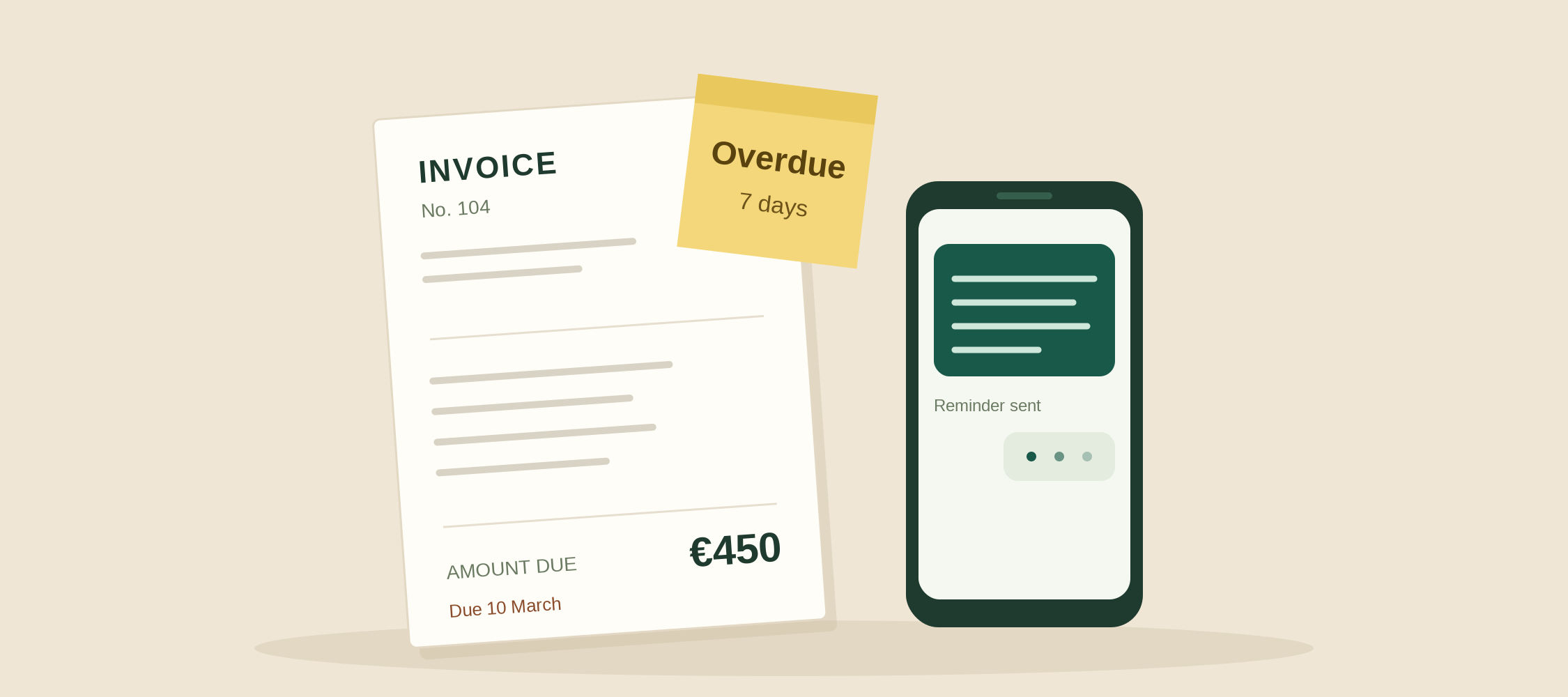
You did the work, sent the invoice and the due date has passed. Nothing has arrived. It is frustrating, but it is also very common, and most late payments can be solved with a calm, steady approach.
Start with a friendly reminder
Often the invoice was simply missed, sent to the wrong person or is waiting for someone to approve it. A short, polite message a day or two after the due date is usually enough. Include the invoice number, the amount, the due date and how to pay. For example:
Follow up on a fixed schedule
The businesses that get paid on time are rarely the toughest ones. They are the most consistent. A simple routine might look like this:
- 1 day lateA friendly reminder by email or message.
- 7 days lateA phone call. Ask for a specific payment date.
- 14 days lateA written reminder that new work will wait until the invoice is paid.
- 30 days lateA final notice. Speak with your accountant or a lawyer about next steps.
Keep a short note of every contact. If a customer is genuinely struggling, agree a payment plan in writing. Part of the money now is better than all of it never.
Make the next invoice easier to pay
Prevention saves the most time. Agree payment terms before you start the job, send the invoice as soon as the work is done and show the due date clearly. For larger jobs or new customers, ask for a deposit upfront. Then, once a week, check which invoices are overdue so nothing slips for months.
Kuleta Business shows which invoices are paid, which are due and which are overdue, so you always know who to follow up with and when.
Thanks for reading.
Back to top